












A shift can look covered on the schedule and still leave your floor short. When a scheduled shift goes unstaffed, or when you pay for hours nobody actually worked, you’re dealing with a ghost shift.
For frontline operations in manufacturing, food processing, energy, and healthcare, these empty slots cost you twice. First as a coverage gap on the floor, then as a line item on payroll. Below, we break down what the term means, how it drives up labor costs, and what you can do to stop it.
What Is a Ghost Shift?
A ghost shift is a scheduled work shift where no one actually shows up, or where the hours get paid even though the work never happened. The term covers two related problems that frontline employers deal with constantly.
The first is the no-show or unfilled shift. An employee doesn’t come in, doesn’t call, or calls out too late for anyone to find a replacement. The position sits empty, and the work either stops or gets pushed onto whoever is already on the floor. Some people describe this as an employee “ghosting” their shift.
The second is paying for time that was never worked. This can happen through buddy punching, timecards that don’t match reality, or a schedule that pays out hours for someone who never clocked in. These ghosting hours slip into payroll quietly, and they’re easy to miss without an auditable record.
Absences are a constant in frontline work. Bureau of Labor Statistics data puts the weekly absence rate for full-time wage and salary workers at about 3.2%. In a large operation, that means some share of your scheduled workforce won’t be there in any given week, and every absence is a potential gap.
You may also see the term used in manufacturing to describe unauthorized after-hours production at a contract factory. This article focuses on the workforce and payroll side.
What Causes Ghost Shifts?
Most coverage gaps trace back to a few repeat issues. Knowing them makes it easier to see where a ghost shift is likely to start.
- Last-minute Call Outs: An employee reports an absence with too little notice to find coverage.
- No-call/No-shows: The employee never reports the absence, so the gap only surfaces when the shift starts.
- Scattered Communication: Absences come in by text, voicemail, or word of mouth, and some never reach the scheduler.
- Timekeeping Gaps: Missing punches, manual timecards, and buddy punching let paid hours drift away from worked hours.
When these go unchecked, a single ghost shift can turn into a recurring problem on the same line or crew.
How a Ghost Shift Inflates Your Payroll
An empty or phantom shift can look like it saved you a shift’s wages. It rarely does. The cost just moves somewhere harder to see.
The Overtime Scramble
When a ghost shift hits, someone has to cover it. Usually that means pulling a worker from another line or asking someone to stay past the end of their shift. Those extra hours often push employees past 40 in a workweek, which triggers time-and-a-half under the Fair Labor Standards Act.
This is ghost overtime. It’s premium pay you only owe because a shift went empty. One no-show can cost 1.5x the regular wage to cover, plus the productivity hit of a tired, stretched crew. Multiply that across every call-out and no-show, and the premium adds up fast.
Paying for Hours Nobody Worked
The other side of the problem is ghost payroll, where wages go out for time nobody put in. A coworker clocks in for a friend. A timecard gets rounded up. A scheduled shift gets paid by default because no one flagged the missing punch.
Each instance looks small on its own. Across a full pay period and multiple sites, it becomes real money leaving your budget with nothing to show for it. It also creates compliance risk, since inaccurate time records make it harder to prove what was actually worked.
How to Prevent Ghost Shifts
Stopping a ghost shift starts before the shift begins. The goal is to spot gaps early, fill them fast, and make sure pay matches the hours actually worked.
- Standardize How Employees Call Out: When employees text a supervisor, leave a voicemail, or tell a coworker, absences get lost. One consistent channel gives managers instant visibility. Learn how to build a better call-out process for your frontline team.
- Automate Backfilling: Dialing down a phone list while a line runs short wastes the time you need most. Automated backfill contacts qualified employees by call or text and fills the open shift for you. See how to fill scheduling gaps without the stress.
- Distribute Overtime on Purpose: Offer extra hours through structured call-out lists that follow your union and work rules. This keeps premium pay fair, documented, and under control.
- Connect Attendance to Payroll: Link time and attendance data to the schedule so a missing punch gets flagged before payroll closes, not after the check is cut.
- Track Shift Patterns: Repeat no-shows on certain days, shifts, or lines often point to a scheduling or engagement issue. Fixing the root cause prevents the next gap.
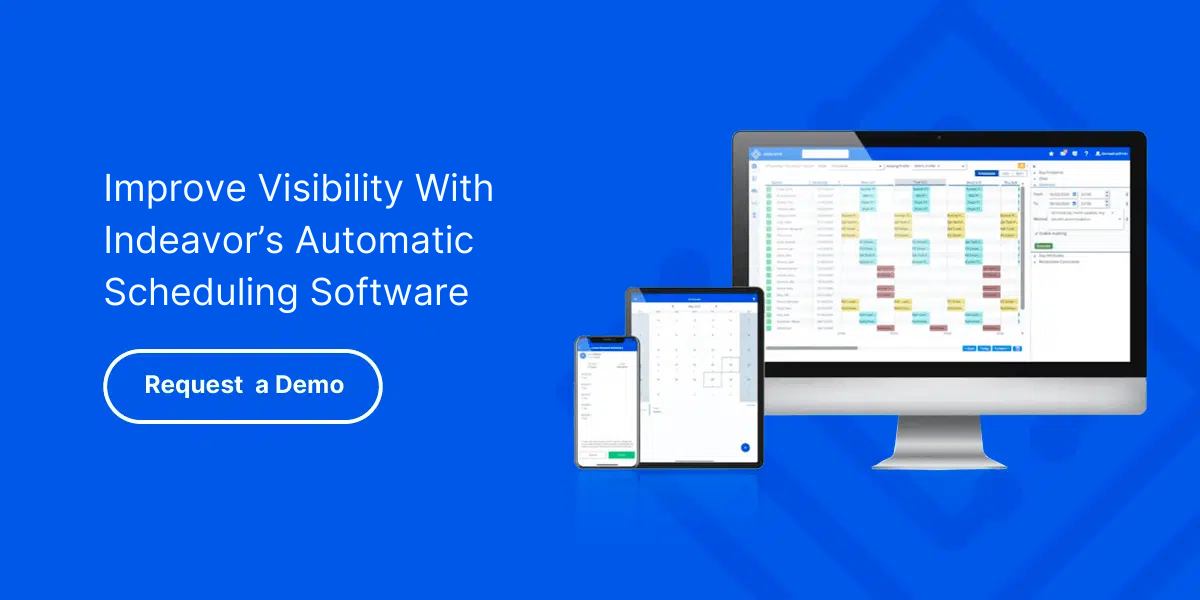
Indeavor gives frontline teams one system to log call-outs, backfill open shifts, and keep an auditable record of every hour worked. That means fewer empty positions and fewer surprises on payroll.
Share this post