











What Makes Software Training Effective
Effective and impactful software training is critical to ensuring adoption and return on your investment for any software you roll out at your organization. Effective software training does not happen by accident.
It happens when training is structured, relevant, and ongoing, and when it is designed around the people who actually do the work and interact with the software. The first step is understanding that not everyone uses software in the same way, nor do they come from the same starting point as a learner.
An administrator, a scheduler, a frontline manager, and an hourly employee all interact with each platform differently. When you start by assessing the specific skills each role needs, training becomes more practical rather than generic. That is why breaking training into short, focused modules is the most effective approach.
Why Hands-On Practice and Engagement Matter
Smaller lessons are easier to absorb, less overwhelming, and fit more naturally into a busy workday. Structure alone is not enough. Hands-on practice is where learning really sticks. People need a safe space to experiment, test scenarios, and make mistakes without risk in production. Real-world exercises help connect the dots between the software and daily work tasks in the system.
At Indeavor, we support this through hands-on testing and classroom-style training for administrators so teams can build confidence and have a resource available to ask questions before they go live in production environments.
Engagement is another critical piece. Training should not feel like a box to check. It should be interactive, with elements like quizzes, challenges, and applied exercises that keep learners engaged, involved, and focused throughout the process. Peer-to-peer learning also plays a big role. Sitting in a classroom side by side and hearing the questions of peers is extremely helpful for content retention.
When teams share tips and tricks and learn from one another, adoption increases, and knowledge spreads organically throughout the organization and out on the floor. It is important to keep in mind that everyone has different learning styles, and your training approach should include tactics that support each style to reach all learners.
How the Indeavor Learning Hub Supports Training
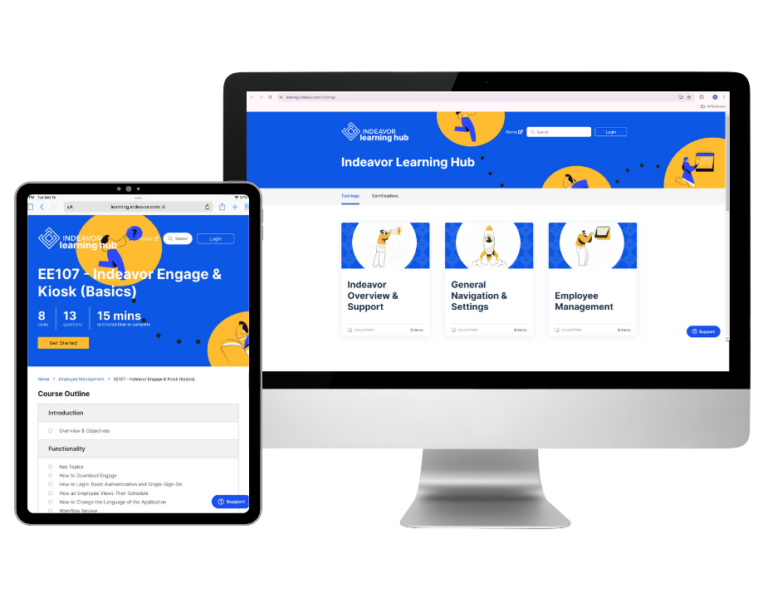
During an Indeavor implementation, we support users with our learning management system, called the Indeavor Learning Hub. The Indeavor Learning Hub allows you to assign training by role or function, track progress, see test results, and identify where learners may need additional support beyond planned training.
With built-in analytics and personalized learning paths, teams can focus on what matters most: reinforcing individual strengths and closing skill gaps before go-live.
Why Training Should Continue Beyond Go-Live
Most importantly, training should not end at go-live. Ongoing support is what keeps skills sharp. As processes evolve and platform maturity increases, the system grows alongside the organization. Easy access to guides, refreshers, support, and coaching encourages continuous learning across the workforce. Bringing all software resources into a central hub, along with a standardized onboarding path for new learners, is the best way to operationalize continuous learning.
When organizations combine structured learning, hands-on experience, engagement, and continuous support, backed by tools like classroom-style training and the Indeavor Learning Hub, software training becomes impactful and effective.
This drives adoption, increases return on investment, and ensures organizations are getting real value from the systems they rely on every single day.