










Nicole Hughes, the Senior Director of Thomas Thor, a specialist on the nuclear energy industry’s workforce, is on a mission. According to Hughes, the global nuclear industry needs to break down the workforce “silos”. The industry employs around 12 million people globally, based on 2024 figures, and extends across a wide sector of jobs. These include power plant operations, reactor design and construction, engineering, and waste management. Its tentacles extend as far afield as uranium mining and fuel producers.
Speaking with Nicole Hughes, that’s a big problem. “Over the past year, I’ve had dozens of conversations with industry leaders about nuclear workforce challenges.” Her discussions served up a heady mix of problems for the industry. They include training timelines, shortages in the pipeline of candidates, retention challenges, and operational demands that are not slowing down.
The Nuclear Workforce Challenge
One of Hughes’s biggest concerns is the loss of valuable skills through retirement. “None of this is news,” says Hughes. “The challenge has been well documented for years. Reports have been written; panels have debated it. And yet, the pressure on the workforce continues to grow.” Maybe, says Nicole Hughes, “It’s time to ask a different question.” She says the industry is sleepwalking into further problems and needs to change one big question. Not “What is the workforce problem?” but instead, “Why aren’t we solving it faster?”
Like many legacy industrial industries, the quagmire surrounds the dilemma of internal silos. “Many organizations are trying to solve workforce issues internally.” She is calling for nuclear leadership to properly examine the internal operational structures. These include internal vendors, staffing, technology providers, and groups that frequently publish recommendations. Often, says Hughes, this is “happening in parallel rather than together.”
At the core of this are the workforce systems in place. “We often treat the problem as fragmented pieces instead of a connected ecosystem.” She lists the problem areas as workforce planning (both short- and long-term), recruiting & building pipelines, retention of workforce, and knowledge as strategic shortfalls. All these internal silos represent the same single system. “And systems rarely improve when everyone works independently.”

Nicole Hughes Advocates for Genuine Partnerships
She advocates bringing together “industry leaders who understand the workforce problem, alongside technology and operational experts who have built tools that can support the people doing the work.” A genuine partnership focused on solving operational workforce challenges together, stresses Hughes. “Where are the real operational bottlenecks? Are the workforce constraints operational vs structural? And what tools are already available that we are underutilizing?”
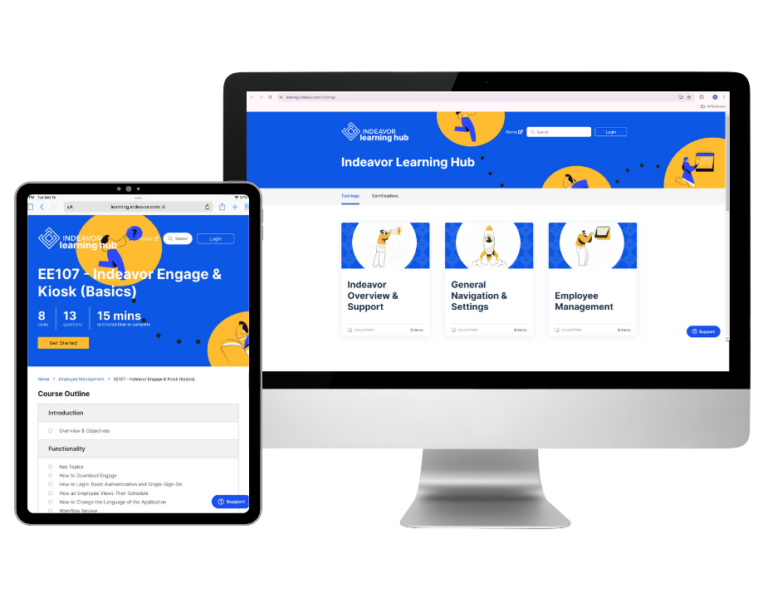
Workforce management tools, like Indeavor, already exist for scheduling optimization, skill tracking, operational workforce planning, and knowledge capture. “When implemented thoughtfully, the right systems can free leaders and operators to focus on what actually matters: running safe, reliable plants,” Hughes added.
It’s a leadership question, according to Hughes, “How do we support a shrinking workforce while the demand for nuclear expertise continues to grow?” The call is for leaders to explore new ways of approaching workforce challenges in full collaboration with each other. Cross-industry collaboration and willingness to build new approaches are long overdue. For Nicole Hughes, it’ll be from “the partnerships we choose to build.”
Share this post


