
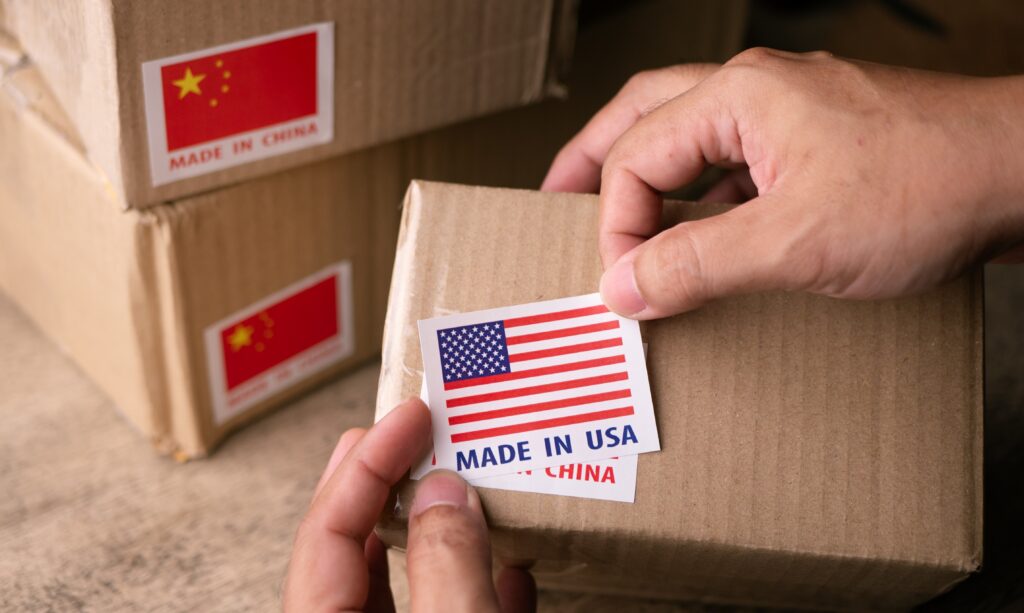
Global supply chains have faced major disruptions in recent years, exposing weaknesses that many manufacturers did not fully consider before. Rising shipping costs, labor shortages, geopolitical issues, and longer lead times have made offshore production less predictable. At the same time, customers expect faster delivery and more reliable supply, which is driving increased interest in reshoring manufacturing as a way to regain control and stability.
Delays in reshoring decisions can also lead to real financial losses. Research shows that ongoing supply chain bottlenecks can reduce annual revenue by up to 5% due to missed demand, higher inventory costs, and production delays. In this environment, waiting to act on reshoring manufacturing can make these challenges worse, as continued disruptions limit output and increase operational costs over time.
What Is Reshoring
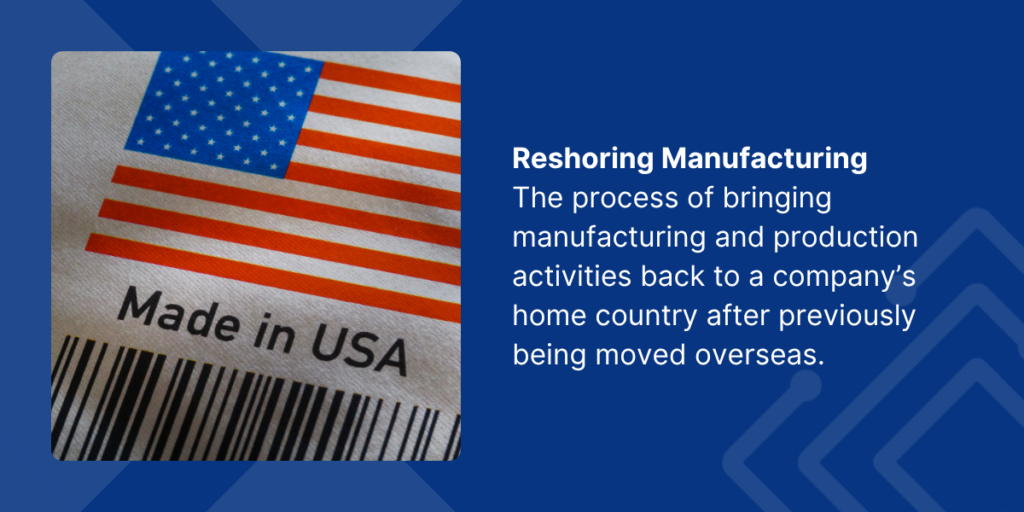
Reshoring, also called inshoring and onshoring, refers to the process of bringing manufacturing and production activities back to a company’s home country after previously being moved overseas. This typically involves relocating production facilities, supply chains, or specific operations from international locations to domestic ones.
Onshoring differs from offshoring, which moves production abroad, and nearshoring, which shifts operations to a nearby country. While offshoring is often driven by lower labor costs, reshoring emphasizes control, resilience, quality, and responsiveness.
In simple terms, it aims to reestablish domestic production in order to strengthen supply chain performance and reduce operational uncertainty.
Reshoring Is Gaining Momentum
Reshoring has gained traction as manufacturers reassess global supply chain strategies. Disruptions caused by global events, transportation delays, and geopolitical uncertainty have exposed the risks of extended and highly distributed supply networks.
Companies are increasingly prioritizing reliability over purely cost-driven decisions. Rising freight costs, longer lead times, and unpredictable logistics have made offshore production less attractive in many scenarios.
Onshoring manufacturing is also influenced by changing customer expectations. Faster delivery, greater customization, and consistent product availability are now critical competitive factors, pushing companies to bring production closer to end markets.
Industries Leading the Reshoring Movement
Several industries are actively reshoring manufacturing due to their high quality requirements and reliance on complex supply chains.
- Automotive Industry: To support electrification and reduce dependency on global suppliers.
- Electronics and Semiconductor Manufacturers: Investing in domestic capacity to improve stability and supply reliability.
- Consumer Packaged Goods: To reduce transportation costs and improve responsiveness to demand.
- Pharmaceutical and Medical Devices: Increasing domestic production to strengthen regulatory compliance and ensure supply continuity.
- Aerospace and Defense: To maintain national security, control critical components, and reduce reliance on foreign suppliers.
- Chemical Manufacturing: To improve supply stability, meet regulatory requirements, and support proximity to downstream industries.
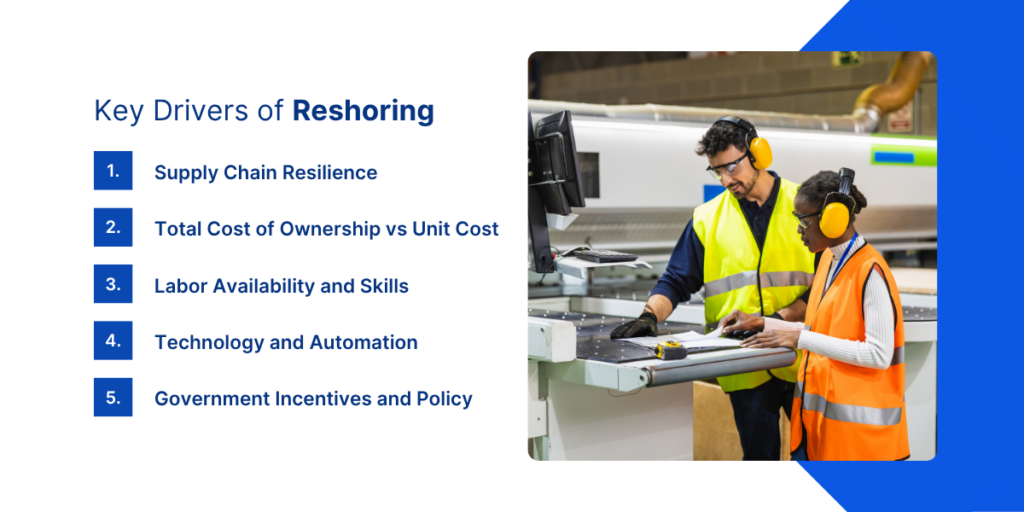
Key Drivers of Reshoring Manufacturing
Supply Chain Resilience
Supply chain resilience is one of the most significant drivers of reshoring. By reducing reliance on distant suppliers, manufacturers can better withstand disruptions and maintain continuity of operations.
Onshoring manufacturing improves visibility across the supply chain and allows companies to respond more quickly to changes in demand or unexpected events.
Total Cost of Ownership vs Unit Cost
While offshore production may appear cheaper on a per-unit basis, the total cost of ownership often tells a different story. This broader view includes transportation, tariffs, inventory holding costs, quality issues, and the cost of delays.
Reshoring can reduce hidden expenses associated with long-distance supply chains, especially when safety stock and expedited logistics are required to maintain service levels.
Labor Availability and Skills
Labor availability plays a critical role in shoring decisions. Offshore regions may offer lower wages, but domestic operations often benefit from a more stable workforce and improved communication.
Reshoring manufacturing requires access to skilled labor capable of supporting advanced manufacturing processes, automation systems, and evolving production requirements.
Technology and Automation
Advancements in automation and digital manufacturing have made domestic production more competitive. Robotics, data-driven systems, and smart factory technologies reduce reliance on manual labor and improve efficiency.
These technologies help close the cost gap between domestic and offshore production while increasing consistency and throughput.
Government Incentives and Policy
Government initiatives, including tax incentives and industrial policy programs, are encouraging manufacturing to return to the United States. These incentives can help offset capital investments and support domestic production growth.
Challenges of Reshoring Manufacturing
Reshoring manufacturing introduces a range of operational and financial challenges that organizations must plan for in advance. While the long-term benefits can be significant, the transition requires careful coordination across labor, infrastructure, and supply chain networks.
- Higher Labor Costs: Domestic labor costs are often higher than offshore alternatives. Manufacturers must evaluate whether productivity gains, automation, and reduced logistics costs can offset these differences.
- Workforce Skill Gaps: Requires a workforce with specialized skills. In some regions, shortages of qualified workers may require investment in training, recruitment, and education programs.
- Capital Investment Requirements: Relocating production domestically requires significant capital. This includes facility construction or upgrades, equipment purchases, and technology implementation.
- Transition Complexity: Involves coordinating multiple moving parts, including suppliers, logistics providers, and internal operations. Without careful planning, transitions can introduce inefficiencies and disruptions.
Benefits of Reshoring
Reshoring manufacturing operations offers several strategic advantages that extend beyond cost considerations. 245,000 reshoring jobs were announced in 2025, bringing the cumulative total to over 2.25 million since 2010. By bringing production closer to home, organizations can improve operational control, responsiveness, and overall supply chain performance.
- Improved Supply Chain Visibility: Enhances transparency by bringing production closer to decision-makers. This proximity allows for better monitoring of operations, faster issue resolution, and improved coordination across teams.
- Reduced Lead Times: Shorter distances between production and customers lead to faster delivery cycles, enabling companies to respond more quickly to demand fluctuations and reduce shipping delays.
- Enhanced Quality Control: Domestic production makes it easier to maintain consistent quality standards. Organizations can more closely monitor processes, enforce compliance, and address defects in real time.
- Reduced Risk Exposure: Limiting dependence on global networks reduces exposure to geopolitical instability, transportation disruptions, and international regulatory changes.
- Economic and Brand Advantages: Can strengthen brand perception by aligning with consumer preferences for domestically produced goods. It also contributes to local economic growth and job creation.
Overall, these benefits make reshoring manufacturing an attractive strategy for companies looking to build more resilient and responsive operations. When executed effectively, onshoring can support both short-term performance improvements and long-term strategic stability.
Steps to Evaluate a Reshoring Strategy
Evaluating a reshoring strategy requires a structured approach that balances operational, financial, and workforce considerations. Organizations that take the time to assess each component carefully are better positioned to avoid disruptions and achieve a successful transition to domestic production.
- Assess Supply Chain Risk: Organizations should begin by mapping their current supply chain to identify dependencies, vulnerabilities, and potential disruptions.
- Conduct Total Cost Analysis: A comprehensive cost evaluation should include labor, transportation, tariffs, inventory, and operational overhead to determine whether manufacturing in that country is financially viable.
- Evaluate Workforce Readiness: Understanding labor availability and skill levels is critical. Companies may need to invest in hiring, training, and workforce development initiatives.
- Analyze Supplier Ecosystem: A successful strategy depends on the strength of the domestic supplier base. Manufacturers must assess whether local partners can meet quality, capacity, and delivery requirements.
- Pilot and Scale Gradually: Many organizations adopt a phased approach, starting with pilot programs before scaling operations. This allows for process validation and risk mitigation during the transition.
A disciplined evaluation process helps ensure that decisions are grounded in data and aligned with long-term operational goals. By following these steps, manufacturers can reduce uncertainty and increase the likelihood of a smooth and effective reshoring implementation.
Reshoring Bottlenecks
A key challenge in reshoring manufacturing is the emergence of operational bottlenecks during transition and scale-up phases. A bottleneck occurs when constraints in labor, equipment, processes, or supply chain capacity limit the ability to ramp up domestic production efficiently.
Common bottlenecks include:
- Workforce shortages that limit the ability to staff shifts or maintain continuous production
- Training gaps that slow down onboarding and reduce early-stage productivity
- Equipment and capacity constraints that restrict throughput during ramp-up
- Supplier limitations where domestic partners cannot immediately meet the required volumes
- Scheduling inefficiencies that misalign labor availability with production demand
These bottlenecks can significantly delay the benefits of onshoring manufacturing. Even when facilities and infrastructure are in place, insufficient labor alignment or planning can lead to underutilized assets and missed production targets.
Mitigating bottlenecks requires:
- Phased ramp-up strategies
- Cross-training and workforce flexibility
- Real-time visibility into labor and production capacity
- Coordination across operations, HR, and supply chain teams
- Continuous monitoring of constraints and throughput
Addressing bottlenecks early helps ensure that increased domestic capacity translates into actual output and financial performance.

How Indeavor Supports Reshoring Manufacturing Initiatives
Successful reshoring requires more than relocating production. It also requires aligning workforce operations with new production demands.
Indeavor supports manufacturers by helping them manage employee scheduling, labor visibility, and operational coordination across sites. As organizations bring production back domestically, maintaining proper staffing levels, shift coverage, and skill alignment becomes essential.
Reshoring manufacturing introduces variability as companies ramp up facilities, onboard employees, and adjust to evolving production volumes. Tools that provide real-time insight into labor capacity and constraints can help reduce inefficiencies and improve stability during this transition.
By aligning workforce planning with production requirements, manufacturers can better navigate bottlenecks, maintain productivity, and support a smoother and more scalable onshoring process.
Key Takeaways for Manufacturers Considering Reshoring
Reshoring represents a strategic shift in how manufacturers design and manage their supply chains. While cost remains an important consideration, factors such as resilience, responsiveness, and operational control are increasingly driving decisions.
Reshoring manufacturing requires a holistic approach that includes cost analysis, workforce readiness, supplier evaluation, and careful transition planning. As supply chain conditions continue to evolve, onshoring will remain a key strategy for manufacturers seeking long term stability and competitive advantage.
About the Author
Claire Pieper is the Digital Marketing Specialist for Indeavor. In her role, she specializes in crafting strategic and engaging content, ensuring that customers are well-informed. Claire is dedicated to enhancing the customer experience and optimizing the user journey through Indeavor’s solutions. To learn more or get in touch, connect with Claire on LinkedIn.